Exhibition Overview
In the continuation of reimagining built space, the Swing House debuted at the Contemporary Arts Center during the Spring/Summer of 2018.
Using salvaged materials and artifacts from both the the Swing House and de Jong’s upcoming “Stair House” project, large-scale installations, sculptural works, and video pieces were exhibited on the fourth floor of the museum.
Displayed within the modern interiors of the Contemporary Arts Center, the old materials strike a deeper contrast—and time is further juxtaposed. In addition to showing old materials in new contexts, de Jong also reveals the age and history of the Contemporary Arts Center itself.
Once part of lived spaces, now reimagined as art in a new context.

Exhibited Works


Stairs
The entire flight of stairs, from the first floor to the third, was isolated during the process of removing the upper floors; later to be sectioned, then reconstructed horizontally - initially at the Swing House, then again at the Contemporary Arts Center.


Drawings
Found by de Jong during the post-purchase clean out process , these drawings were created by the four daughters who were raised in what is now the Swing House.

.webp)
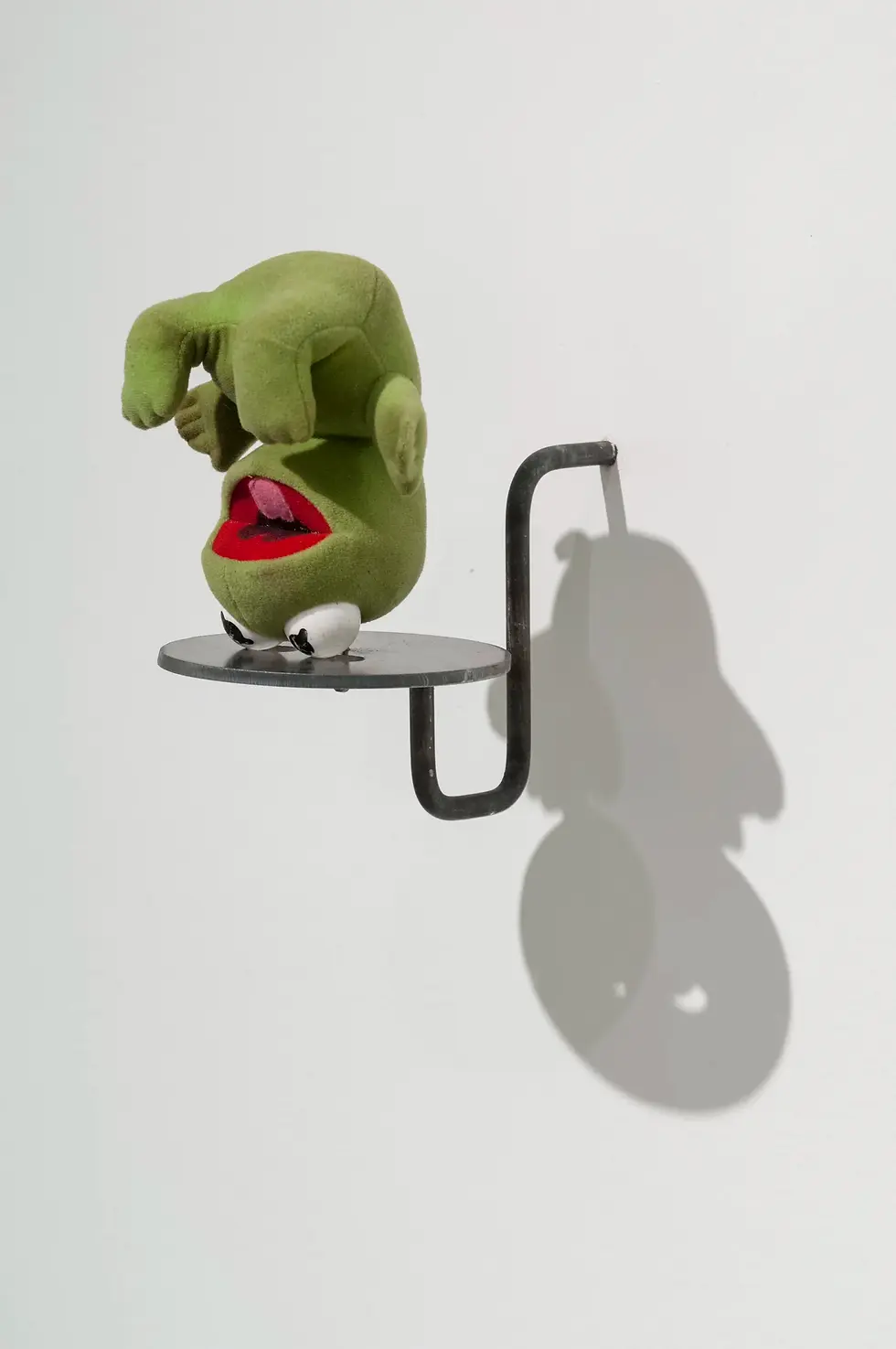
Kermit
During the demolition process, Kermit dropped out of the ceiling. De Jong often keeps an object or two around during the rebuilding process; due to the top heavy imbalance of his eyes, Kermit rested upside down.


Bench
Extracted when the joists supporting the second floor were cut and removed, this bench is a ready-made of sorts.


1:3:4
Having a ‘program’ to use all the collected interior trim, de Jong made sets using a 1:3:4 ratio. Stepping down an inch in width each time, 7 sizes were configured differently, referencing time and various symbols.


Speakers
A live feed from the exterior of the Swing House played from these speakers. The neighborhood’s lively sounds included a fire station, a busy road, and the train switching yard.
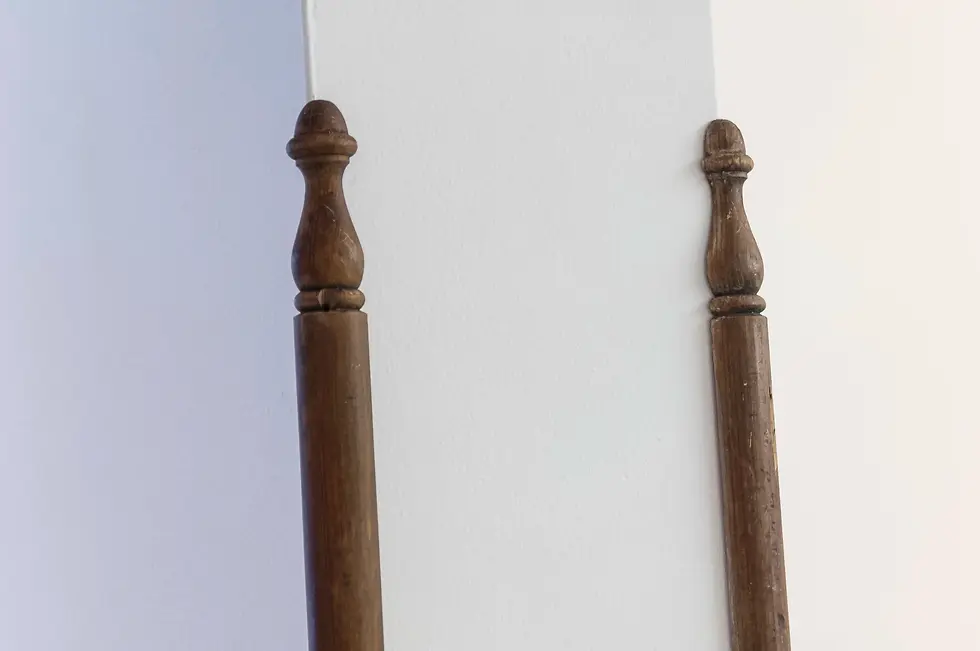
Corner protectors
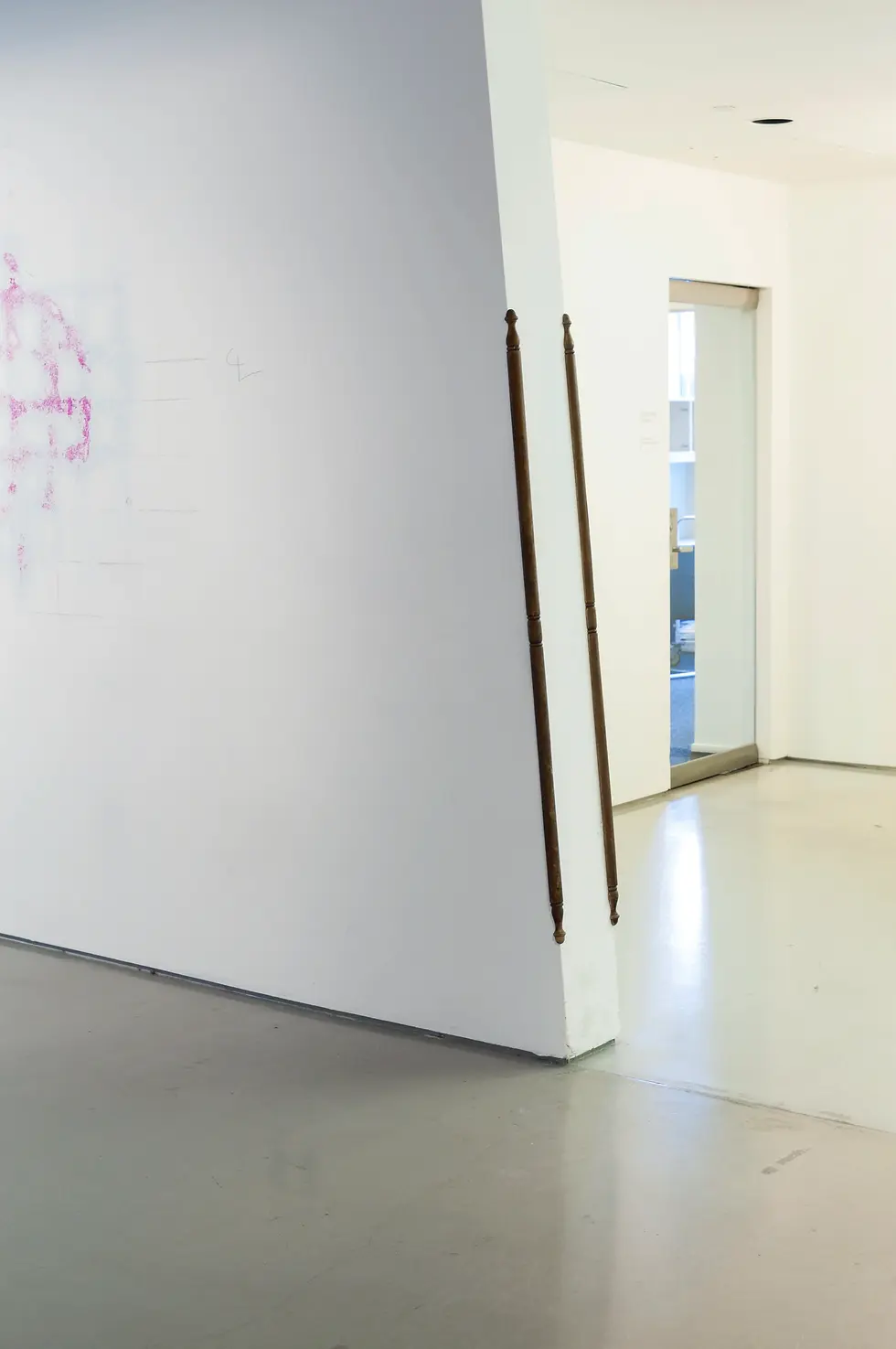

These corner protectors are period to when the Swing House was built. They were found in the basement, likely collected by the house painter who previously owned the house.
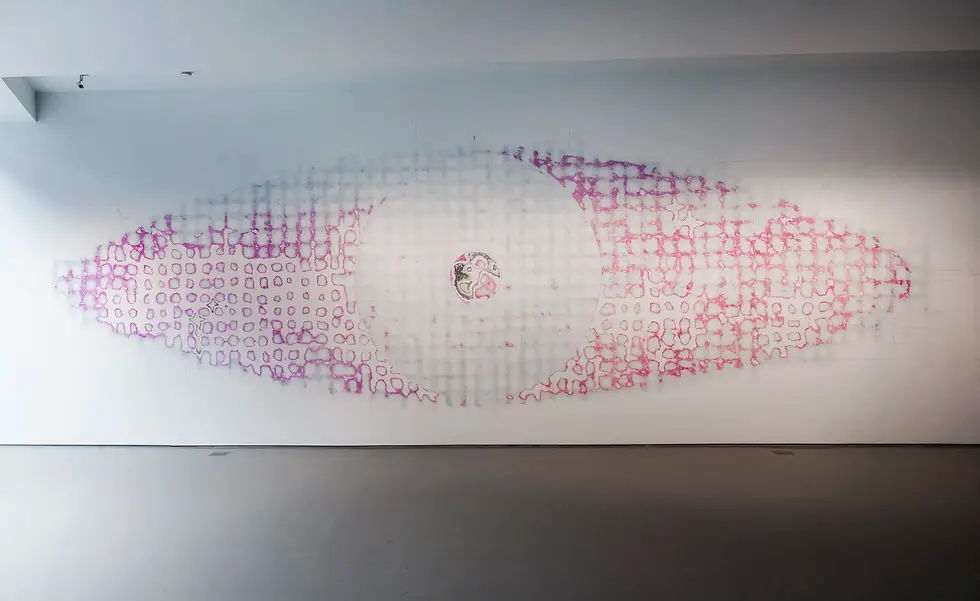


Eye
Using a rotary mechanical sander, the eye took shape as the former wall colors from past exhibits were revealed in the sanding process.

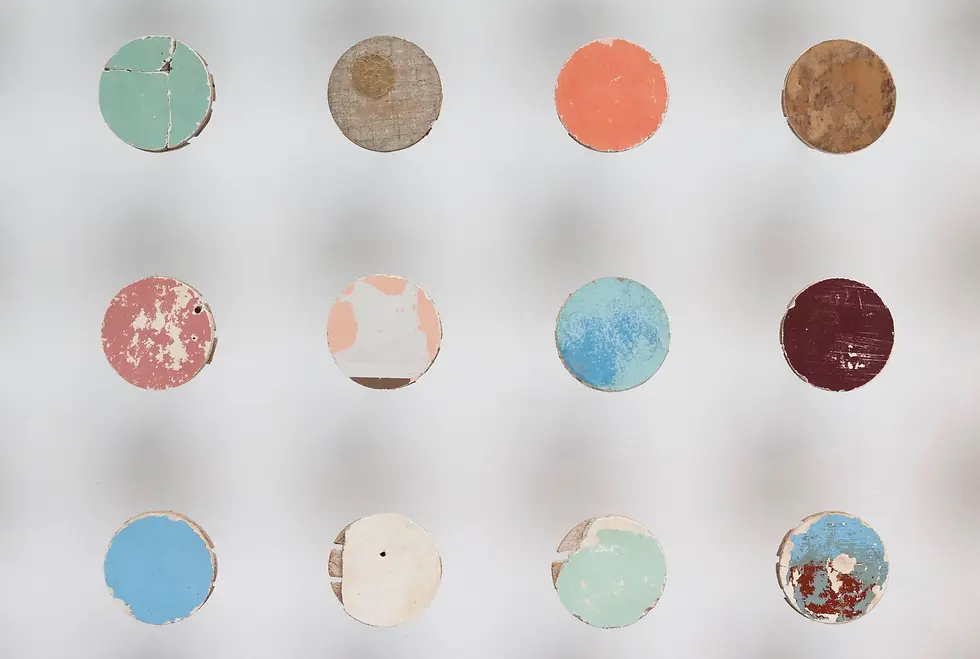

Stair House Circles
Next to the Swing House is the Stair House, de Jong’s future project. In contrast to the Swing House where the history is expressed on the existing exterior wall, the history of the Stair House takes the form of 6 inch circles extracted from the interior walls, intending to be exhibited remotely.
.webp)


Landscape Gutter towers
Along the eastern side of the Swing House, hidden underneath concrete, de Jong found original clay gutters used to direct water away from the house. The brick pavers - seen here at the base - were discovered when the concrete was removed.


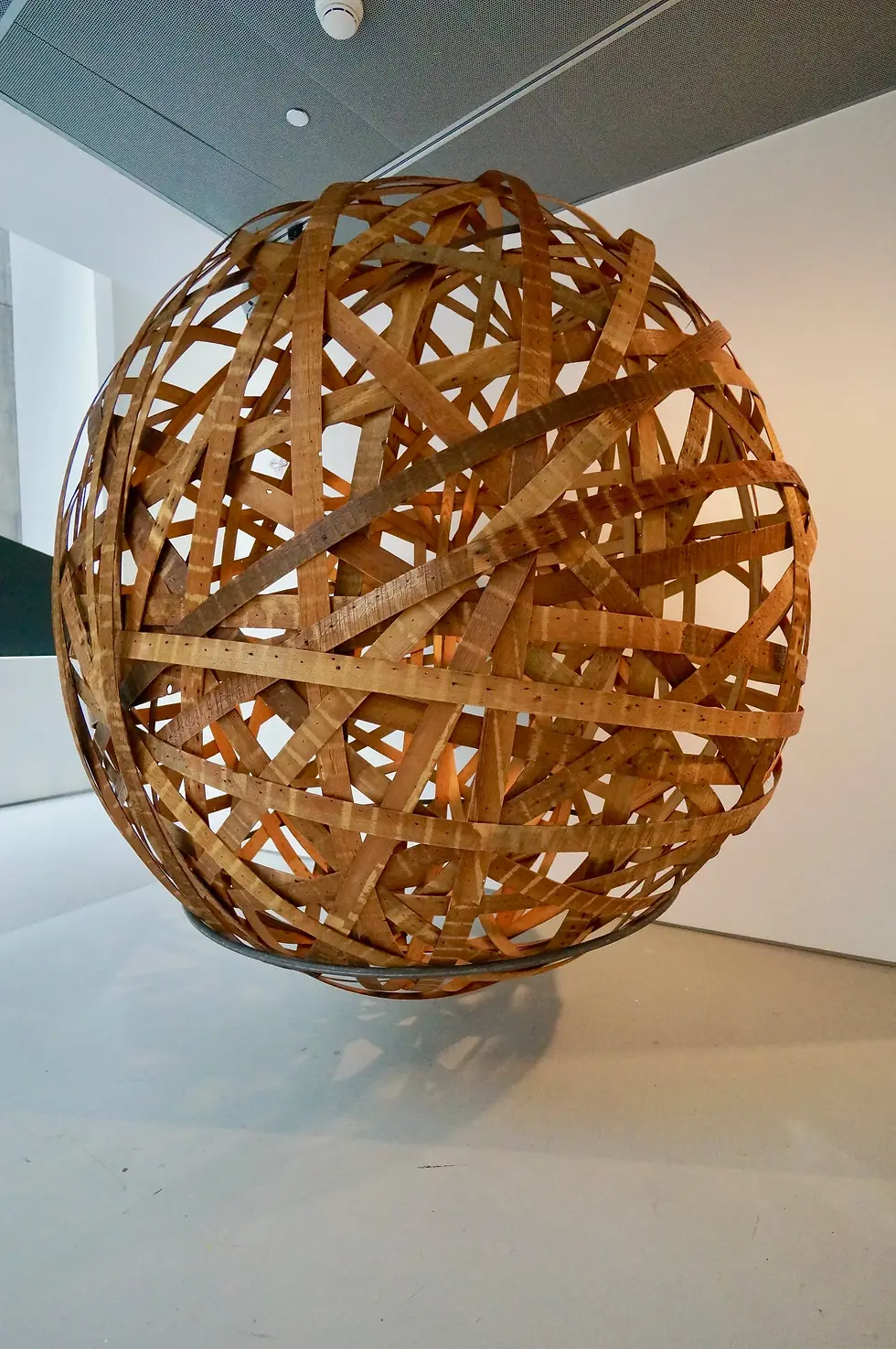
Wall Ball
The original studs used for the interior wall partitions show the history of the plaster and lath; thin ribbons were cut - preserving the history - then glued together to create a 750-foot ribbon.
.webp)


Photos
The original studs used for the interior wall partitions show the history of the plaster and lath; thin ribbons were cut - preserving the history - then glued together to create a 750-foot ribbon.


.webp)
Handboxes
Boxes are made of the original plaster lath. There are 64 boxes in the cube, each box taking 64 cuts to make.


Knelt
Made from the shoe molding extracted from the third floor of the Swing House.


Videos
These videos explore the transformation of both the mundane process and object, into art.


